
Australia Immigrant Remittances of $35 Billion Spark Economic Impact Debate
Australian immigrants sent $35 billion to their home countries in 2024, sparking debate over economic outflow. Critics worry about reduced domestic spending, but economists counter that immigrants' tax contributions and economic activity far exceed remittance amounts.
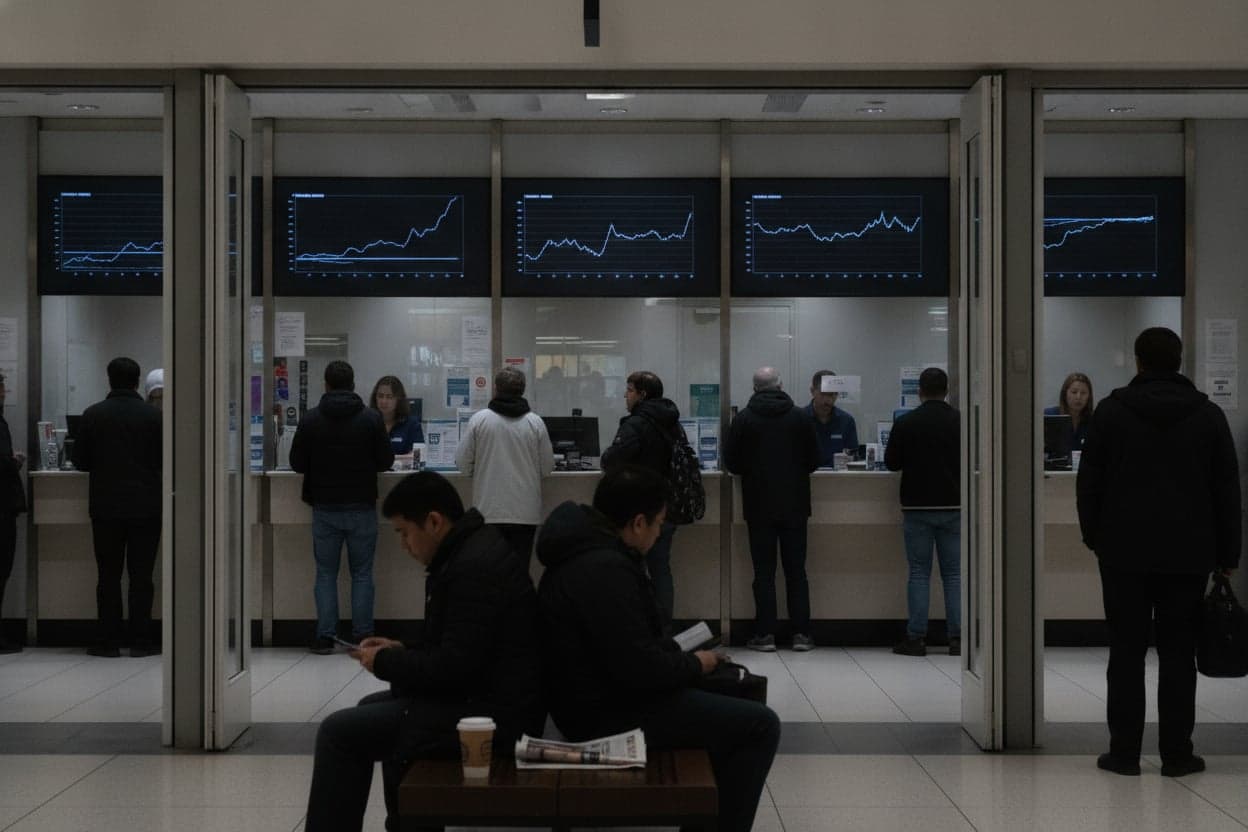
$35 Billion Overseas Remittance Volume
2024 remittances sent overseas from Australia reached $35 billion, according to Money Transfer Australia. India alone received approximately $7 billion.
Ryan Edwards, Associate Professor of Economics at Australian National University, questioned the accuracy of these figures. "We don't actually measure money going overseas very well," he said, adding "these numbers are actually quite uncertain." He explained that even if accurate, it represents less than 1% of Australia's economy and comes from income that has already been taxed.
Divided Economic Impact Assessments
Some political commentators argue remittances represent capital draining from Australia's economy. Jamie Johnston criticized in a social media post that "the money is not being spent in Australian cafes or restaurants," adding "it's not being used to purchase Australian products in Australian stores, and it's not circulating within Australian households."
Conversely, Associate Professor Edwards emphasized the benefits immigrants bring must be considered. "The real comparison is with immigrants versus without them," he said. "If you eliminate that person, you stop the money outflow, but you also lose the jobs they create here, the wages they spend on what Australians produce, and the taxes they pay." He added that most immigrants are net fiscal contributors.
Immigrants' Actual Spending Patterns
Mrinal Datt, who migrated to Australia from India four years ago, sends hundreds of dollars at a time for her partner's parents' medical expenses. The founder of Indian Women Abroad explained, "In many South Asian cultures including India, there's a saying that you don't marry one person, you marry the whole family. Not helping family is unthinkable."
However, she emphasized her contributions to Australia are far greater. "Considering airfare, income tax, rent, and now mortgage, I've spent hundreds of thousands of dollars in Australia. The $200-400 I send home doesn't compare."
Muhammad Omair Zia, a Pakistani technology and healthcare entrepreneur, also sends money to family and employees back home, but revealed most of his business earnings are spent in Australia. "Remittances are actually less than 20% of what I earn and spend here," he said.
Cultural Obligations and Financial Burdens
Supriya Singh, Associate Professor of Sociology at La Trobe University, explained money is "one of the most important ways" to show care in many cultures. "If you're from China, Vietnam, the Middle East, or Pacific regions, remittances are a way to convey belonging to family, that you're thinking of them and caring for them," she said.
However, Professor Singh warned remittances can become a tool for financial abuse. She noted this issue was raised in Victoria's Royal Commission into Family Violence. "When parents demand too much from children so they can't afford settlement costs, remittances can become a medium of abuse," she explained.
Datt acknowledged remittances are a cultural practice but impose burdens on already tight budgets. "Parents need to realize children are not their retirement plan," she said. "People who come overseas know it's really tough paying university fees. Many people live paycheck to paycheck."
According to World Bank estimates, global remittances to low and middle-income countries reached $924 billion in 2023, continuing to serve as an "essential driver of economic and human development."
Sources
This article summarizes publicly available news as of its publication date. Visa and migration settings can change without notice. Confirm the latest rules through the cited sources or a consultation before acting.